






Conditions of the outer or middle ear with
conductive or mixed hearing loss
Indications
- Conductive or mixed hearing loss
- Unilateral, bilateral
- Absence of active middle ear infections
- Anatomy allows placement of the FMT (Floating Mass Transducer) on a suitable vibratory middle ear structure
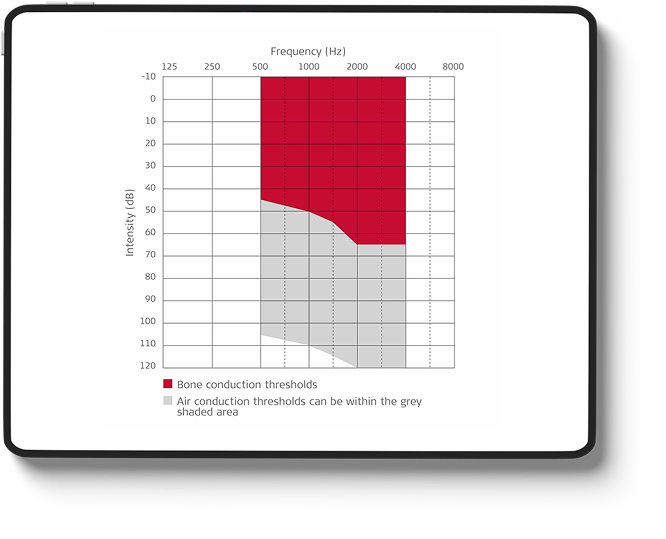
- Stable bone conduction thresholds: <50 dB at 500 Hz to approx. 60 dB at 4 kHz – see diagram
- Ability to benefit from amplification
- No retrocochlear or central auditory disorders
- Realistic expectations
- Minimum age: 10 years
Key features of the VIBRANT SOUNDBRIDGE Middle Ear Implant
SAMBA 2 Audio Processor
**The VORP 503 middle ear implant is MR conditional. Recipients with VORP 503 may be safely scanned at 1.5 Tesla (T) following the conditions detailed in the instructions for use.
**Unless required for diagnostic reasons.

Find a nearby Specialist

Follow us on LinkedIn
Practical hearing‑implant insights for your ENT or Audiology practice.
Stay up to date with clear information on candidacy basics, real‑world patient stories, and relevant updates from the field of cochlear and other hearing implants.
Our newsletter keeps you informed about trends in hearing implantology that are relevant for your daily work.
Information about MED-EL’s privacy policy can be found here.