







SCIENCE UPDATE
New scientific studies summarized for you
Totally Implantable Cochlear Implant (TICI): Feasibility Study
(Original title: Lefebvre, P.P., Müller, J., Mark, G. et al. Rehabilitation of human hearing with a totally implantable cochlear implant: a feasibility study. Commun Med 5, 10 (2025).)
Key message:
Safety, hearing performance and user satisfaction with the TICI are comparable to conventional cochlear implants.
Background
Cochlear implants (CIs) restore hearing in individuals with severe-to-profound hearing loss. Despite their proven benefits, CI uptake remains low. One reason is the external audio processor, its visibility, and its limitations for the user.
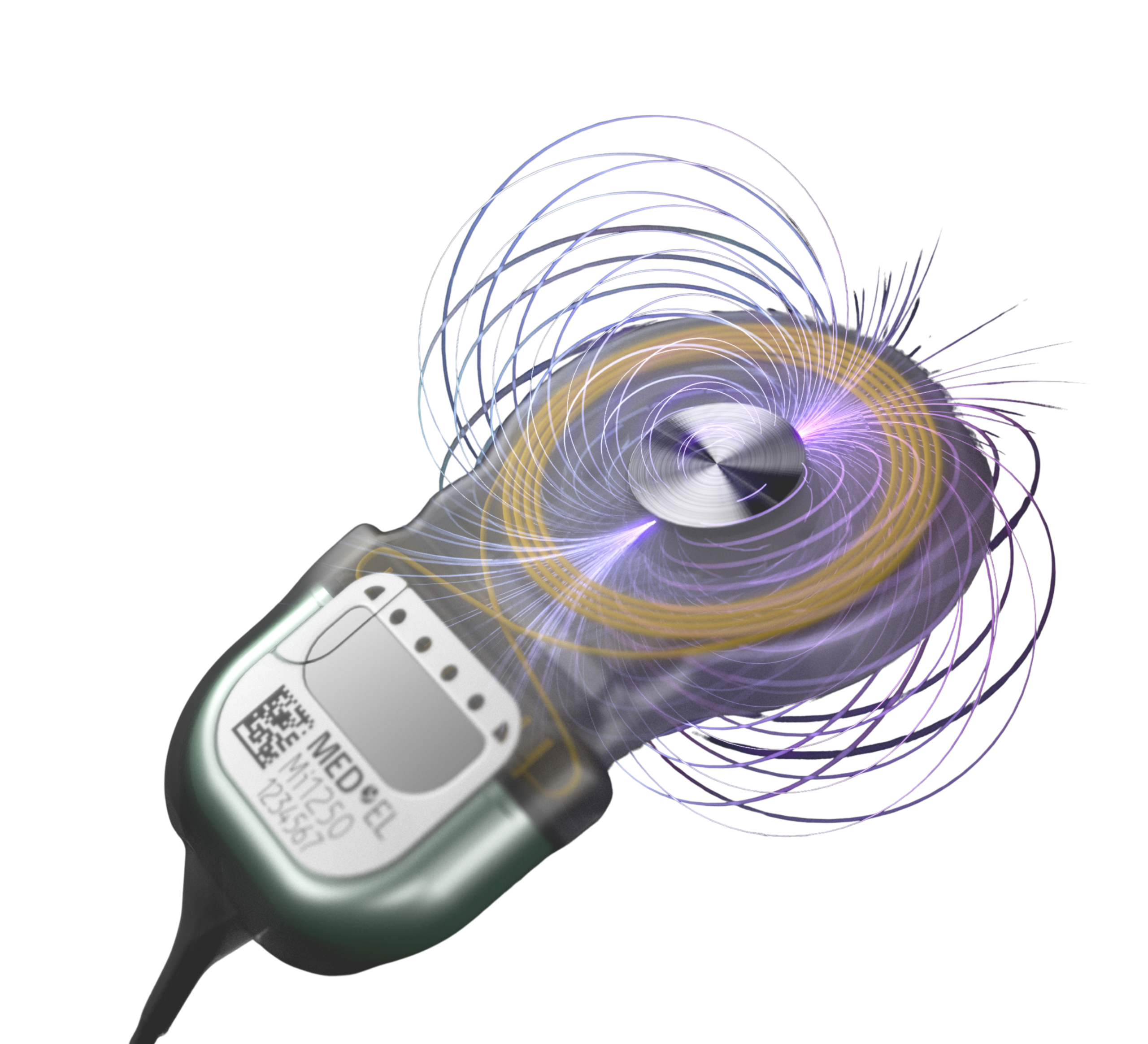
A totally implantable cochlear implant (TICI) was developed, combining all CI components in a single implant, invisible from the outside, eliminating the disadvantages of an external audio processor. The first-in-human study results of the TICI assessed its safety, hearing performance and user satisfaction.
Methods:
- Non-randomized single group assignment
- Participants:
- 6 (4 female, 2 male) from 2 CI centers (Liège, Munich)
- Mean age: 44.6 years
- Bilateral severe to profound HL (>70 dB HL)
- Within-subject comparison with TICI and external audio processor
- Data collection over 52 weeks
- Surgery and fitting:
- Standard surgical approach for conventional cochlear implants
- First fitting 4 weeks post-op
- Outcome measures:
- Adverse events
- Speech perception in quiet (monosyllables) and in noise (sentence tests, SRT50)
- Subjective quality of life, subjective sound quality (HUI3, SSQ-12, HISQUI-19, NCIQ)
- Subjective user satisfaction: diary reports
- Device usage (hours per day): TICI data logging
Results:
- Safety:
- Adverse event distribution is comparable to conventional CIs.
- Adverse events: 15, of which
- Anticipated serious adverse device effect: 1 (swelling and infection signs at implantation site, successfully resolved without sequelae)
- Unanticipated serious adverse device effects: 0
- Hearing performance and user satisfaction:
- Speech perception in quiet and noise with the TICI was similar to the CI used with an external audio processor (within-subject comparison) as well as comparable to conventional CIs.
- Patient-reported outcome measures and user satisfaction scores all increased over the study duration.
- 5 of 6 participants used the TICI without an external processor most of the time.
Read the full paper here (Open Access): Rehabilitation of human hearing with a totally implantable cochlear implant: a feasibility study | Communications Medicine
Practical hearing‑implant insights for your ENT or Audiology practice.
Stay up to date with clear information on candidacy basics, real‑world patient stories, and relevant updates from the field of cochlear and other hearing implants.
Our newsletter keeps you informed about trends in hearing implantology that are relevant for your daily work.
Information about MED-EL’s privacy policy can be found here.