






 Back
Back
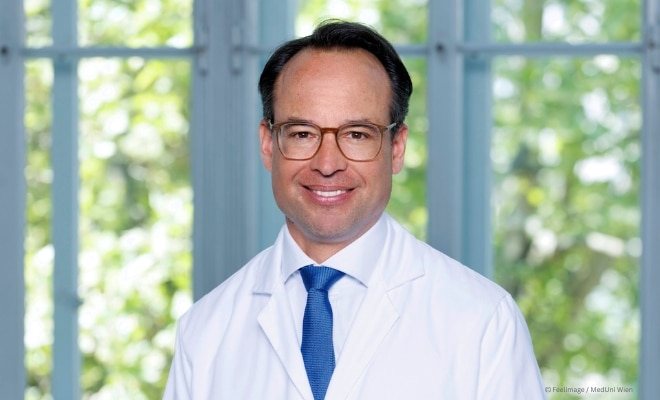
Expert Interview with Univ.-Prof. Dr. Christoph Arnoldner
Can Gene Therapy replace Cochlear Implants?
Gene therapy can restore hearing only in a very small group of patients with specific genetic defects such as OTOF-related deafness; for the vast majority, cochlear implants will remain the standard of care. Current gene therapy is still in clinical trials and requires intact hair cells, meaning most patients are not eligible. Therefore, cochlear implantation should not be delayed in anticipation of gene therapy options.
Gene therapy for severe hearing loss applies only to a very small subset of patients with a defined genetic defect. For the majority, cochlear implantation will remain the standard of care for the foreseeable future.
Cochlear implantation should not be deferred based on expectations of gene therapy options.
Christoph Arnoldner, Head of the Department of Otorhinolaryngology at the Medical University of Vienna, shares expert insights.
HB: For decades, researchers have explored gene therapy as a treatment for deafness, with limited success. What has changed in recent years?
Prof. Arnoldner: Over the past one to two years, we have seen a real breakthrough. For the first time, hearing has been successfully restored in humans using gene therapy. This was achieved in children with otoferlin-associated deafness (DFNB9), a rare genetic form of congenital hearing loss. Until recently, gene therapy had only shown success in animal models, such as mice. Now, the first children born deaf and treated with gene therapy are able to hear without a cochlear implant.
HB: What makes otoferlin‑related deafness particularly suitable for gene therapy?
Prof. Arnoldner: In otoferlin-related deafness (OTOF), the structures of the cochlea, including the outer and inner hair cells, are intact. The problem lies solely in the absence of the otoferlin protein, which is essential for transmitting signals from the inner hair cells to the auditory nerve.
HB: How common is otoferlin‑related deafness?
Prof. Arnoldner: Of the roughly 200 known genetic causes of congenital deafness worldwide, otoferlin mutations account for only about 2–8%. Globally, around 200,000 people are affected. In the United States, approximately 20–40 children are newly diagnosed per year. In Austria, this translates to one to two cases every two years. For the vast majority of people with congenital deafness, the cochlear implant will remain the gold standard.
HB: What is the current clinical status of OTOF gene therapy?
Prof. Arnoldner: It is still in the clinical trial phase and has so far been used in only a small number of patients. That said, the results are extremely encouraging: around 90% of treated children show age-appropriate speech development, with very few side effects reported
HB: How is OTOF gene therapy administered?
Prof. Arnoldner: During a surgical procedure, an adeno‑associated virus (AAV) is used as a vector to transport the otoferlin gene into the inner ear. Using a very fine catheter and a micropump, the vector is slowly introduced into the cochlea. The application itself takes about 15 minutes. A crucial prerequisite is that all hair cells are intact – without this, the therapy cannot be successful.
HB: How important are genetic diagnostics in today’s clinical practice?
Prof. Arnoldner: Genetic testing has become essential. Today, all children being evaluated for a cochlear implant undergo genetic testing before implantation. In Vienna, we work closely with the Institute of Genetics, which provides reliable results within one to two months. This allows us to identify the exact genetic cause of hearing loss at an early stage of the evaluation process.
HB: Why is otoferlin‑related deafness often diagnosed relatively late?
Prof. Arnoldner: Children with OTOF-related deafness often pass standard newborn hearing screening because they have normal otoacoustic emissions (OAEs) and functioning outer hair cells. Only a BERA test reveals the missing neural signal transmission.
As a result, diagnosis, and consequently cochlear implantation, is often delayed, which can negatively affect speech development.
HB: What would you consider best practice today?
Prof. Arnoldner: Ideally, genetic diagnostics should help answer several key questions:
- What is the cause of the hearing loss?
- Is there an underlying syndrome?
- What is the prognosis for hearing loss, hearing aid use, or cochlear implant candidacy?
- And finally, is gene therapy an option?
HB: How do you see the future of gene therapy in ENT medicine?
Prof. Arnoldner: Otoferlin is just the beginning. The next major goal is developing genetic treatments for Connexin 26 mutations, which are the most common genetic cause of hearing loss worldwide.
In some clinics in China, newborn hearing screening is no longer based on OAEs. Instead, genome sequencing is performed, with results available very quickly.
HB: Will gene therapy replace the cochlear implant?
Prof. Arnoldner: No, but it will complement it. For a very specific group of patients, gene therapy may become an alternative. For everyone else, the cochlear implant, one of the most successful innovations in modern medicine, will remain the gold standard of care.
Related articles
Single-Sided Deafness: When the Second Ear Is Missing
 Expert Interview
 Expert Interview
 Sign for new updates
By subscribing to our newsletter, you stay up-to-date on the best practices in hearing implant technology.