







Benefits of Anatomy-Based Cochlear Implant Fitting in Patients with Single-Sided Deafness
SCIENCE UPDATE
New scientific studies summarized for you
Benefits of Anatomy-Based Cochlear Implant Fitting in Patients with Single-Sided Deafness
(Original title: Kurz A, et al. Anatomy-based fitting improves speech perception in noise for cochlear implant recipients with single-sided deafness. Eur Arch Otorhinolaryngol. 2025 Jan;282(1):467-479.)
Key Message
Anatomy-based CI fitting (ABF) shows advantages over conventional fitting in terms of speech understanding and more natural sound quality, and is well accepted by CI users with single-sided deafness.
Background
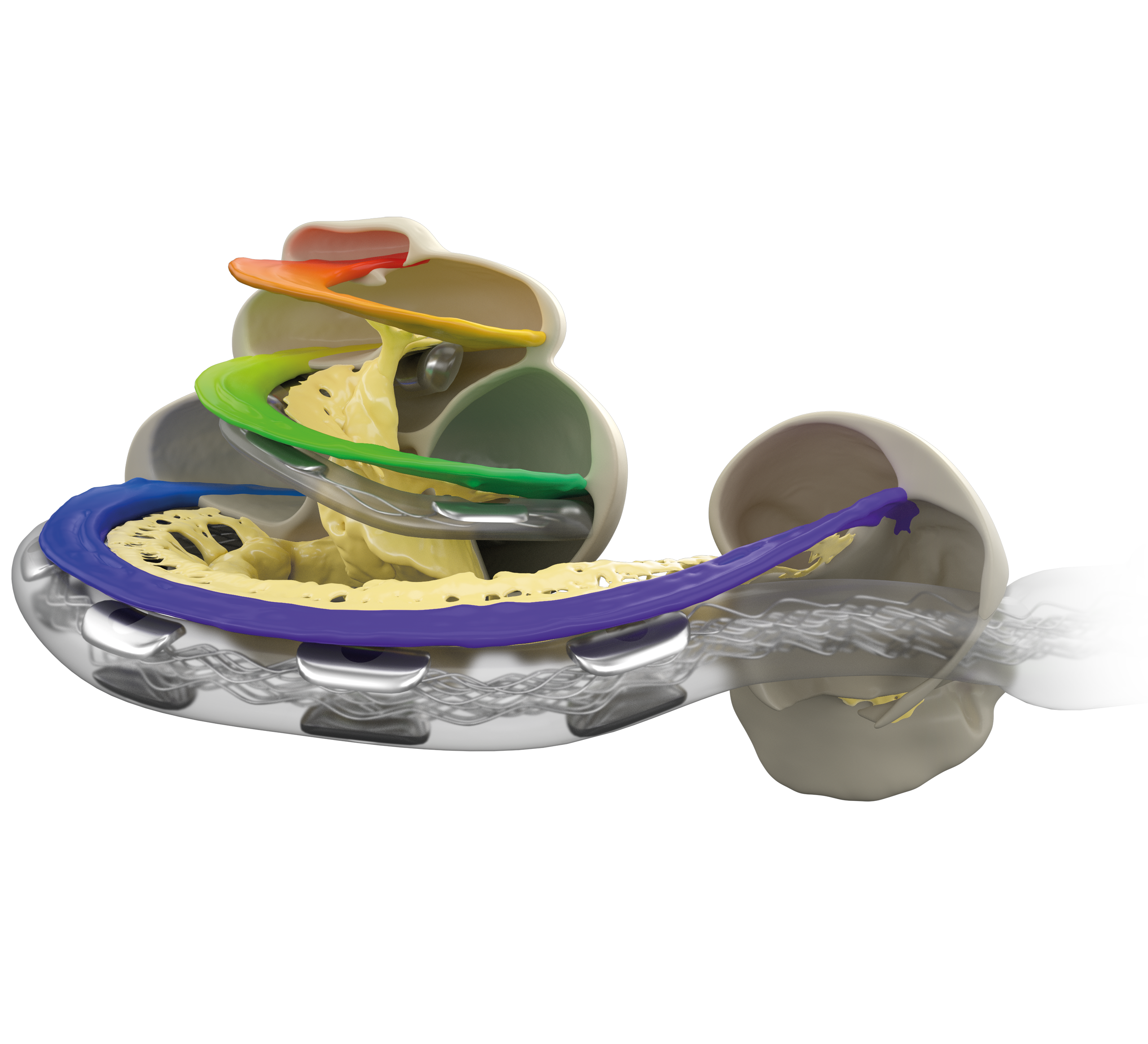
An increasing number of patients with single-sided deafness (SSD) are being treated with cochlear implants (CIs). However, conventional processor fitting does not always align with the cochlea’s natural frequency mapping (tonotopy), which can impair natural sound quality. Individualized, anatomy-based fitting (ABF) uses pre- and postoperative imaging to achieve the most natural tonotopic CI fitting possible.
Study Objective
This study investigated the hearing outcomes and sound quality experienced by SSD users with ABF compared to conventional fitting.
-
Method:
– 12 postlingually deafened SSD users
– Minimum age: 18 years; average age: approx. 50 years
– Average CI experience: approx. 3 years
– Test 1: with existing processor settings using conventional fitting
– Test 2 (1 month later): with ABF fitting
Objective Measurements:
– Speech understanding in quiet (Freiburg monosyllabic word test)
– Speech understanding in noise (Oldenburg MATRIX sentence test, OLSA Noise)
– Binaural hearing effects (squelch effect and summation effect)
Subjective Sound Quality:
– HISQUI questionnaire
Results:
Significant improvement in speech understanding in noise with ABF compared to conventional fitting
Binaural hearing: better integration of sound information from both ears with ABF
Sound quality: Subjectively high satisfaction with both ABF and conventional fitting, but the majority preferred the ABF setting and chose to keep it.
Practical hearing‑implant insights for your ENT or Audiology practice.
Stay up to date with clear information on candidacy basics, real‑world patient stories, and relevant updates from the field of cochlear and other hearing implants.
Our newsletter keeps you informed about trends in hearing implantology that are relevant for your daily work.