




Why Can a Child Present with Speech and Language Difficulties Despite Normal Hearing Test Results?
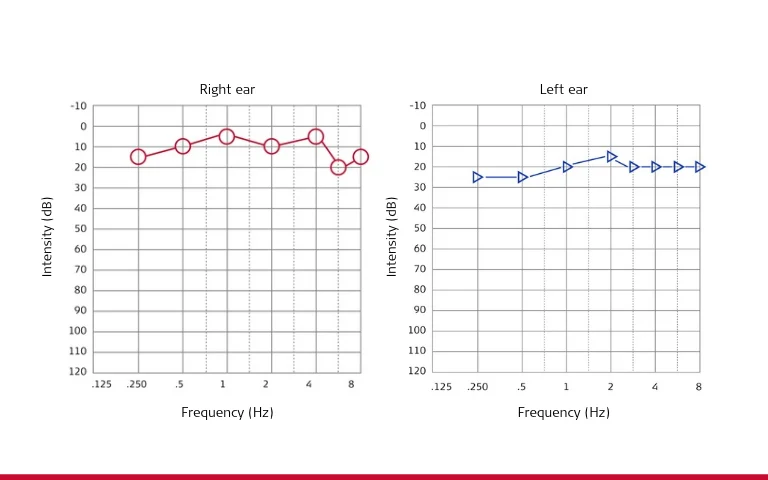
A child may present with clinically significant hearing impairment despite apparently normal hearing test results. Standard hearing screenings do not always assess each ear independently and may fail to detect single-sided deafness (SSD). Consequently, speech and language development may be adversely affected even when routine test findings are unremarkable. In children with persistent speech and language delays and unexplained behavioural difficulties, comprehensive ear-specific audiological assessment should be considered.
Clinical Abstract
This case study describes a paediatric patient presenting with persistent speech and language difficulties, academic underachievement, and reduced peer interaction. Despite repeated routine hearing assessments, congenital single-sided deafness (SSD) remained undiagnosed for several years. Following cochlear implantation and auditory rehabilitation, the patient demonstrated rapid and significant improvements in auditory performance, speech and language development, academic outcomes, and social integration. The case highlights the importance of ear-specific audiological evaluation and timely cochlear implantation in paediatric patients with SSD.
This patient case illustrates how an incidental diagnosis eventually led to successful treatment.
How could Single-Sided Deafness remain undetected?
When children present with speech and language delay, behavioural concerns, learning difficulties, or social challenges despite passing newborn hearing screening and unremarkable hearing tests, clinicians should consider separate assessment of each ear.
>> Download the full patient case as a PDF
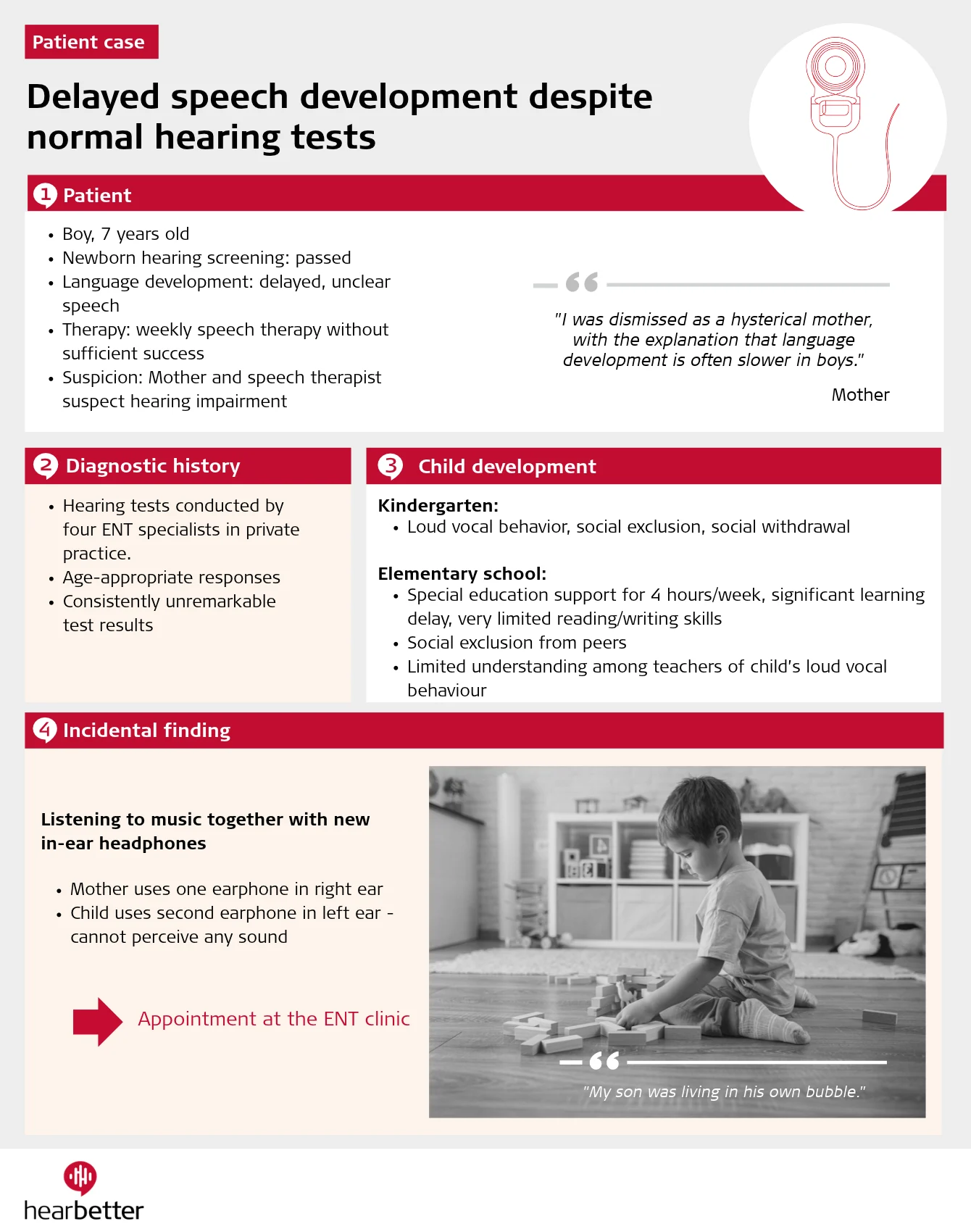
>> Download the full patient case as a PDF here: PDF-download.
Patient
- Seven-year-old boy
- Newborn hearing screening: Passed
- Speech and language development: delayed, reduced speech intelligibility
- Weekly speech and language therapy with limited benefit
- Mother and speech-language therapist suspect hearing loss
Clinical Presentation
- Incidental finding: While listening to music with in-ear headphones, the child did not hear in his left ear
- Comprehensive assessment at ENT clinic confirmed congenital single-sided deafness (SSD) that had remained undetected during previous hearing assessments
Audiological Assessment
- Auditory Brainstem Response (ABR/BERA): confirmed profound hearing loss in left ear
- Single-sided deafness, undetected in earlier routine hearing assessments
Treatment
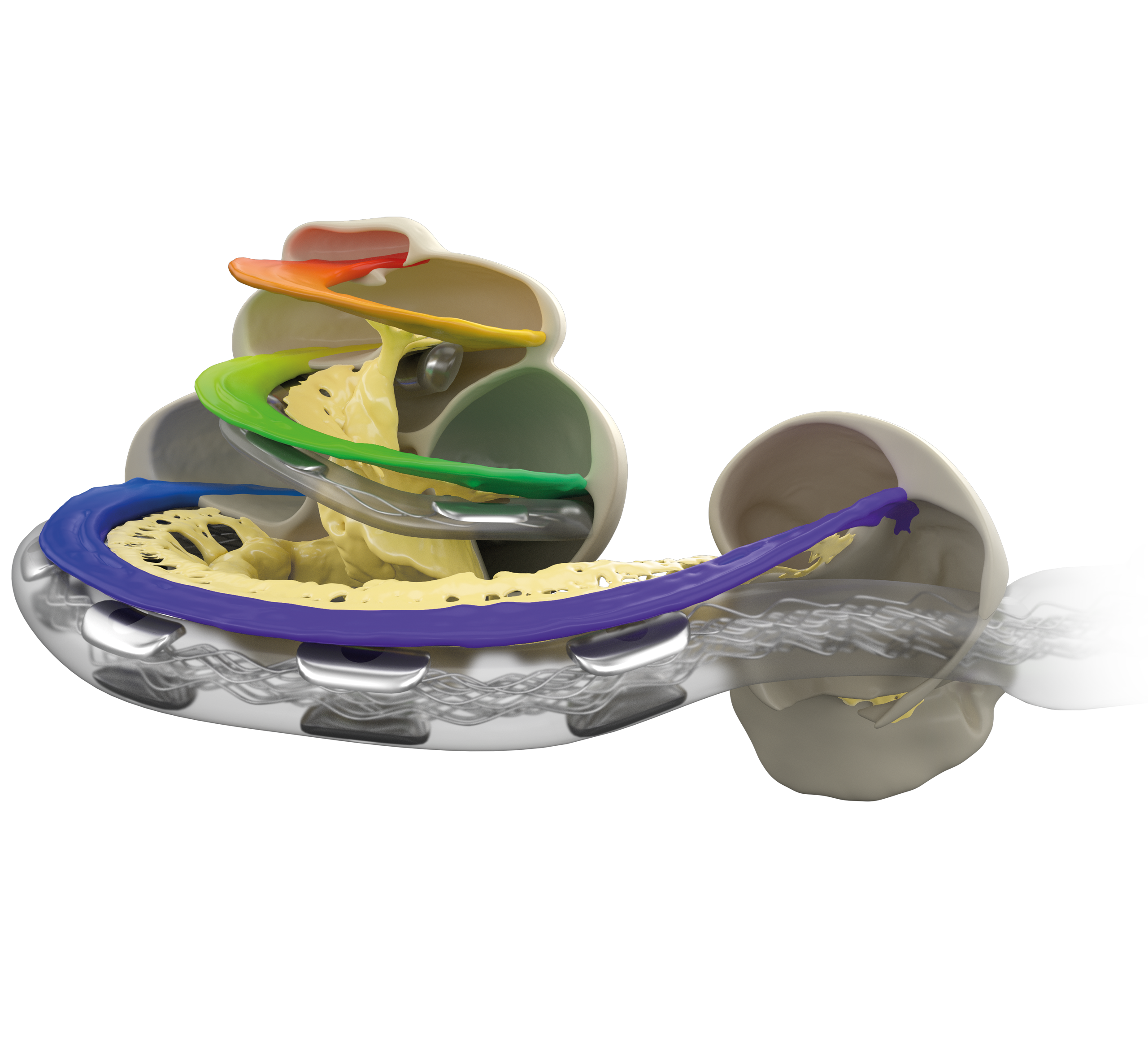
- Cochlear implantation in left ear
Outcome
- Cochlear implantation at eight years of age
- Four years of regular speech and language therapy
- Following cochlear implantation, auditory rehabilitation, and a change of school, the patient demonstrated substantial progress:
o Rapid improvement in speech and language skills
o Significant improvement in academic performance
o Successful social integration at school
o 5 years post-operative: age-appropriate speech, language, and social development, active social life
o 10 years post-op: higher education completed, successful social integration, increased self-confidence
Clinical Take-Home Messages
- Hearing loss may remain undetected
Unilateral hearing loss may remain undiagnosed despite routine hearing assessments and successful newborn hearing screening. - Ear-specific assessment is essential
Separate assessment of each ear is critical for the accurate diagnosis of unilateral hearing loss. - Early diagnosis and intervention
Timely diagnosis and referral to a cochlear implant centre can help prevent prolonged auditory deprivation and support speech and language development, educational achievement, and social participation. - Improved Quality of Life
Structured diagnostic assessment and timely intervention can lead to substantial long-term improvements in communication abilities, academic performance, social functioning, and overall quality of life.
Practical hearing‑implant insights for your ENT or Audiology practice.
Stay up to date with clear information on candidacy basics, real‑world patient stories, and relevant updates from the field of cochlear and other hearing implants.
Our newsletter keeps you informed about trends in hearing implantology that are relevant for your daily work.